SEP 8
WRITING COMMUNITIES
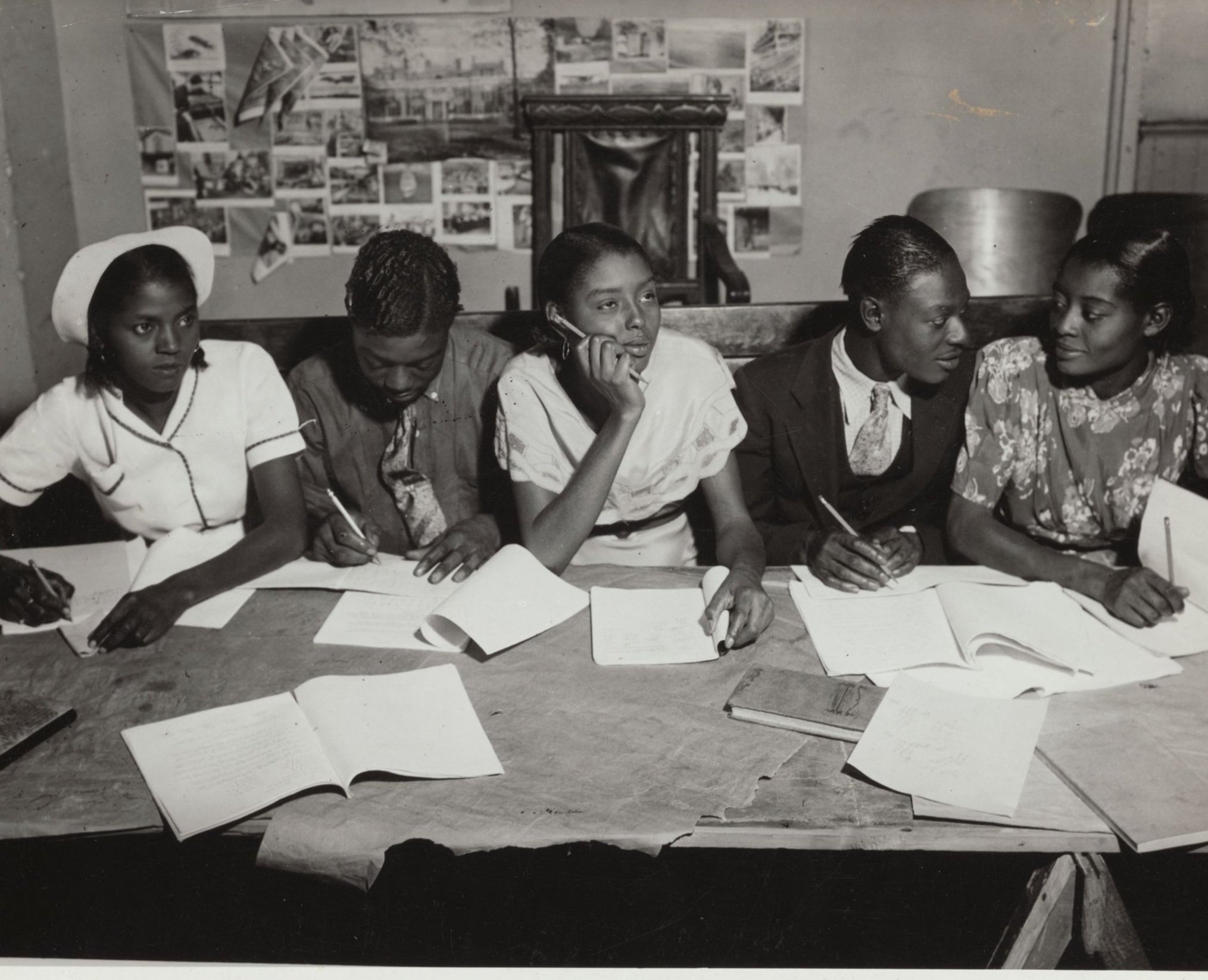
Schomburg Center for Research in Black Culture, "Students Writing,” via New York Public Library
TO PREPARE FOR TODAY:
Read the following as orienting texts to “the writing workshop,” one of the most prominent forms of writing-in-community in K-12 schools:
Read ONE of the following that focuses on how writing workshops operate at different grade-levels:
Complete your ‘Weekly Writing’ assignment and bring it to class.
1-page “cooking” memo: what are some potential topics/goals for the final project in the course?
It’s still early, but if you want to claim a particular day to facilitate your Writing Experiment (i.e., the Teaching Experiment assignment), you can sign-up here.
IN-CLASS DOCUMENTS:
Presentation, Week 3 Slides
SUPPLEMENTAL RESOURCES (THINGS I’LL DRAW FROM OR REFERENCE IN CLASS):
Lewis-Jones,The Writer’s Map
Background on Nancie Atwell
While we have focused on Atwell’s workshop approach — documented in her book In the Middle — there are other popular workshop approaches, like that of Lucy Calkins and Linda Rief.
For an overview of the similarities and differences among different ‘Workshop’ advocates (e.g., Nancie Atwell, Lucy Calkins, Linda Rief), see Mulcahy’s doctoral dissertation, “A Critical Analysis of Literacy in the Workshop Approach Described by Atwell, Calkins, and Rief.”
Workshop approaches, particularly those aligned with the work of Lucy Calkins (and specifically, her “Reading Workshop” method), have recently come under attack by advocates of ‘The Science of Reading.’ For some context on this contention: Lewis, “How One Woman Became the Scapegoat for America’s Reading Crisis” and Thomas, “Radical Eyes for Equity: Collateral Damage in Yet Another Reading War.”
Joe Brainard, I Remember…
A recent retrospective on Brainard, and “I Remember…”